
Antigua is not a typical Caribbean resort island. Yes, it has the beaches, 365 of them! “One for every day of the year” as locals will tell you, but what makes it different is the combination of things you find alongside the sand: a UNESCO World Heritage naval dockyard still in active use, a sailing culture that draws international fleets every spring, a food scene shaped by West African, British, Lebanese and Syrian influences, and a community with a genuine sense of place. This guide covers what Antigua is really like; the character, the culture, the food, the people and the pace of life – so you know what to expect before you arrive.
We’re based in English Harbour and have seen the island in every season. Here’s what Antigua is actually like to visit, and why so many people who come once keep coming back.
1. The Island Itself – Size, Geography and First Impressions
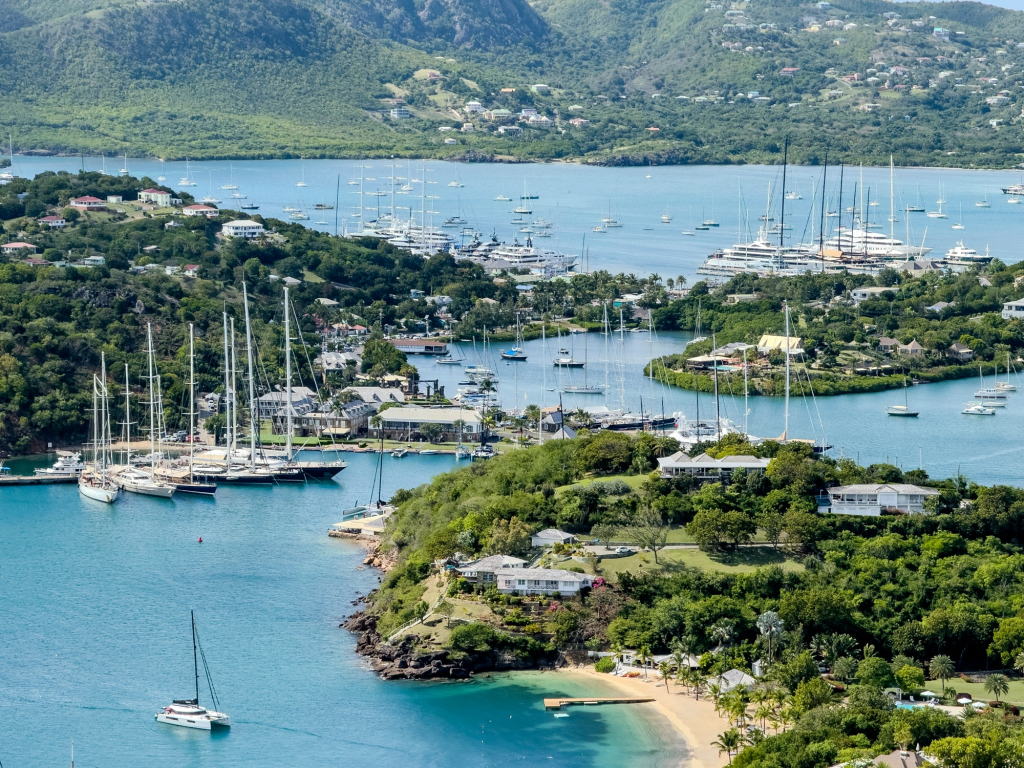
Antigua is small, 108 square miles in total, and most visitors quickly realise they can drive from one end to the other in under an hour. The island is roughly triangular, with St. John’s at the northwest, English Harbour at the south, and dozens of bays, headlands and beaches in between. The coastline is intricate and deeply indented, which is what produces those 365 beaches, with each bay and cove carving out its own strip of sand.
The landscape is mostly low and gently undulating rather than dramatically mountainous. The highest point is Mount Obama (formerly Boggy Peak) in the southwest, rising to 1,330 feet. The interior is drier than many Caribbean islands, Antigua has no rivers and few springs, which historically made it one of the drier Leeward Islands. The west and south coasts, including the English Harbour area, tend to be greener than the flatter, drier north.
First impressions of Antigua depend entirely on where you arrive and where you stay. St. John’s from the cruise port is busy, colourful and commercial. English Harbour is historic, maritime and community driven. The resort beaches of the west coast are a different experience again. The island is compact enough that all three are within 40 minutes of each other, but each feels like its own place.
2. What Is Antigua Known For?
The Beaches:
365 beaches “one for every day of the year” is the famous claim, and while the exact number is debated, the spirit of it is true. The coastline is so indented that almost every bay produces its own beach. Dickenson Bay and Runaway Bay on the north coast are the most popular resort beaches. Half Moon Bay on the east coast is widely considered one of the finest beaches in the Caribbean. English Harbour’s nearby Pigeon Point and Galleon Beach are calmer, more intimate and increasingly well served by excellent restaurants and beach bars.
Nelson’s Dockyard And Maritime Heritage:
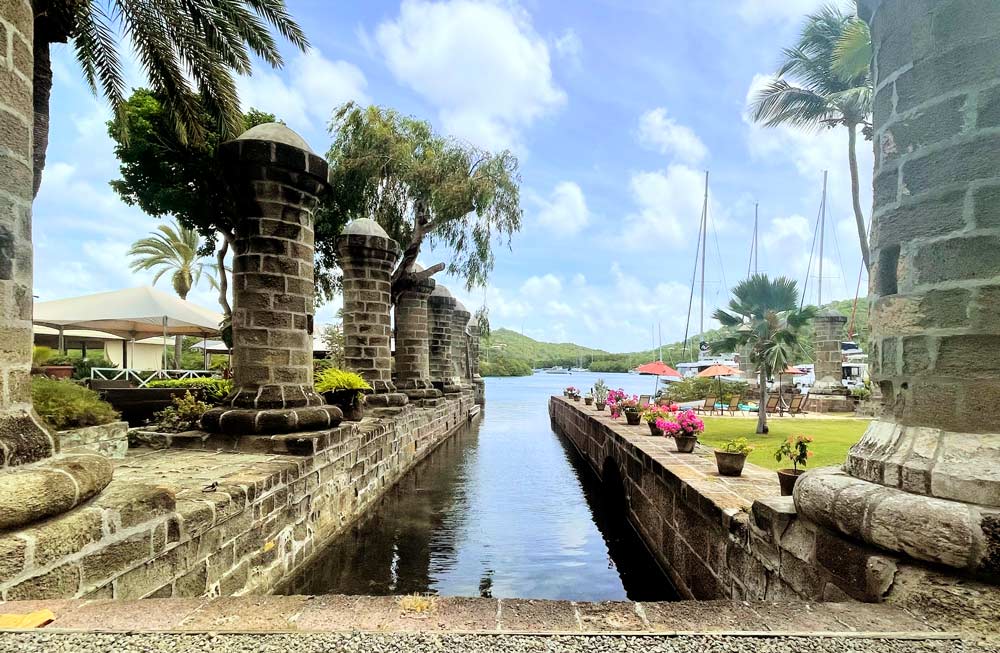
The UNESCO World Heritage dockyard in English Harbour is Antigua’s most significant historical landmark — the only continuously working Georgian naval dockyard in the world. Built in the 18th century and named after Admiral Horatio Nelson, who was stationed here from 1784 to 1787, it remains an active marina and community hub. The surrounding national park encompasses Shirley Heights, Clarence House, Fort Berkeley and Dow’s Hill, together they tell the story of Antigua’s strategic importance during the age of sail. For a full guide to what to do in Antigua’s English Harbour — the dockyard, the beaches, the restaurants and the hiking trails — read our complete English Harbour guide.
Sailing:
English Harbour is one of the premier yachting destinations in the Caribbean. The annual events calendar; the RORC Caribbean 600, the Antigua Classic Yacht Regatta and Antigua Sailing Week, draws international fleets and thousands of visitors every spring. The harbour itself is never without yachts, from cruising sailors using it as a base to superyachts passing through on Atlantic circuits.
Carnival:
Antigua Carnival, held in late July and early August, is one of the Caribbean’s great cultural celebrations, 12 days of soca, steelpan, mas bands, pageants and street parties in St. John’s. It’s the island’s most important annual event and the most direct expression of Antiguan cultural identity.
Cricket:
The Sir Vivian Richards Cricket Ground in North Sound hosts international test matches and regional tournaments. If you happen to be visiting when a match is on, going is worth it regardless of whether you follow cricket. It’s one of the most authentic experiences of Antiguan community life available to a visitor.
3. Antigua Food And Drink – What The Island Tastes Like
Antigua food is one of the most underrated things about the island. The cuisine is a direct reflection of its history, West African techniques and ingredients, British colonial staples, Lebanese, Syrian, Indian and Chinese immigrant influences and the abundant fresh seafood that surrounds the island on all sides.
Local Dishes To Try:
- Fungi and saltfish — the national dish. Fungi is a cornmeal-based side dish similar to polenta, served alongside saltfish (salt-cured cod) sautéed with peppers, onions and tomatoes. A staple at local restaurants and family tables across the island.
- Ducana — sweet potato and coconut dumplings wrapped in banana leaves and steamed. Often served alongside saltfish as part of a traditional Antiguan breakfast.
- Jerk chicken — originating in Jamaica but a staple throughout the Caribbean including Antigua. Found at roadside stalls, beach bars and restaurants across the island.
- Fresh lobster — Antiguan lobster is exceptional. Best eaten grilled, simply seasoned, at a harbour-front restaurant or a beach bar that sources it locally. Lobster season in Antigua runs from July 1st through April 30th — the closed season is May and June.
- Pepperpot — a slow-cooked stew of meat and vegetables, deeply flavoured. One of Antigua’s oldest dishes, with roots in Amerindian cooking.
- Johnny cakes — fried or baked bread made with cornmeal, common as a breakfast or snack alongside saltfish.
- Rum — Antigua’s Cavalier rum is the local spirit, produced on the island. A rum punch at sunset — at Shirley Heights, at Pigeon Point or from Kittyhawk’s jetty — is an Antigua ritual that every visitor should experience at least once.
The Dining Scene:
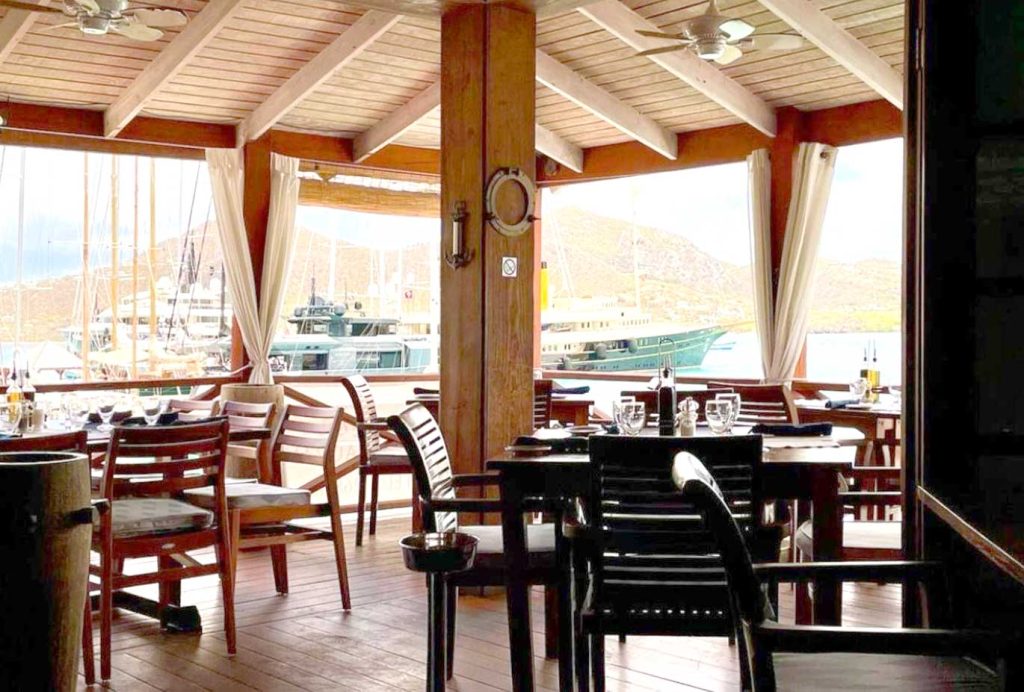
English Harbour and Falmouth Harbour have one of the strongest restaurant concentrations in the Caribbean relative to their size,Italian, French, Caribbean, Mexican, Asian and international cuisine all within walking distance of each other. Restaurants range from casual beach bars like Bumpkins and Loose Cannon to French Creole at Colibri, dockyard dining at The Mainbrace and Italian fine dining at Incanto. St. John’s adds further variety, Papa Zouk on Hilda Davis Drive is a celebrated local institution known for its extraordinary rum collection and fresh seafood.
4. The Pace Of Life – What Antigua Actually Feels Like
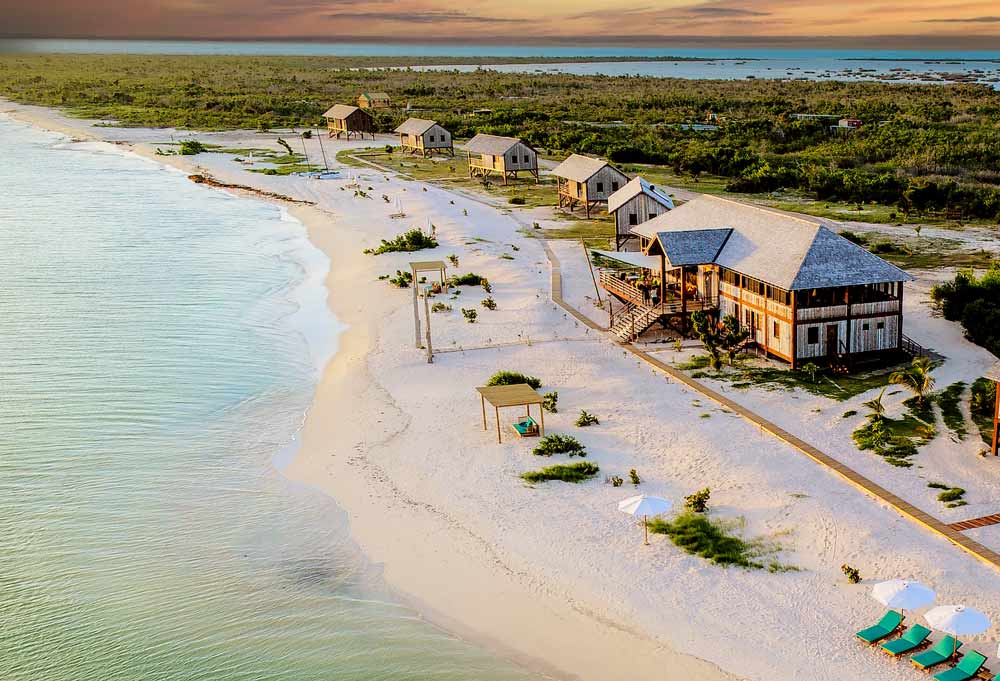
The phrase “island time” exists for a reason in Antigua, and it’s worth understanding before you arrive. The pace of life is genuinely slower than most visitors are used to that service at restaurants takes longer, bureaucratic processes move at their own rhythm, and the general attitude toward urgency is more philosophical than most Western visitors default to. Most people find this a relief within a day or two.
English Harbour has a slightly faster tempo than the rest of the island, the sailing industry, the restaurant scene and the international community create an energy that is more purposeful than the resort areas. But even here, the default is warmth and ease rather than efficiency for its own sake.
The social life of English Harbour revolves around the harbour itself, the dockyard front, the beach at Pigeon Point, the bars along Dockyard Drive and the weekly rituals of Shirley Heights. People move between these on foot. Conversations start and continue across days. It’s a small enough community that you quickly become a familiar face, and the line between visitor and regular disappears faster than you’d expect. It’s the kind of place that turns a first Antigua holiday into a recurring one.
5. What Kind Of Destination Is Antigua?
A Destination Built Around Sailing, History And Food:
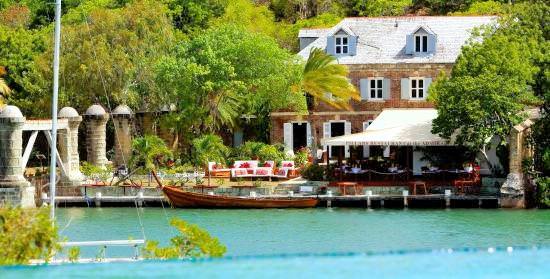
Antigua is built around sailing, beaches, food and history There is nightlife, Abracadabra in English Harbour has been the social hub since 1985, and St. John’s has casinos and live music bars, but the island’s energy is fundamentally different from resort destinations designed around entertainment. Visitors who want that kind of holiday should look elsewhere. Visitors who want character, depth and something to discover should come here.
A Premium Caribbean Destination:
Antigua is one of the more expensive Caribbean islands, particularly during peak season. Accommodation, dining and activities all carry a premium. The value is real, the quality of the Antigua food, the beauty of the setting and the calibre of the sailing events justify it, but visitors expecting budget Caribbean prices will find the island surprising. For advice on the best time to visit Antigua for value, read our season guide.
An Island With Preserved Character:
Despite being a popular Caribbean travel destination, Antigua has avoided the overdevelopment that has compromised some other islands. There are no high-rise hotels in English Harbour. The dockyard and its surroundings look largely as they did a century ago. The beaches are rarely overcrowded. The island has a sense of preserved character that is increasingly rare in the Caribbean and it’s one of the main reasons visitors return.
Well Suited To Families And Groups:
The combination of calm beaches, excellent restaurants, historical sites and things to do in Antigua makes it a strong choice for families and groups on a holiday here. A villa rental in Antigua gives families space, a private pool and the freedom to organise their own days. Kittyhawk’s pool, jetty and kayaks make it particularly easy for families with children.
6. Where To Stay In Antigua: Why English Harbour
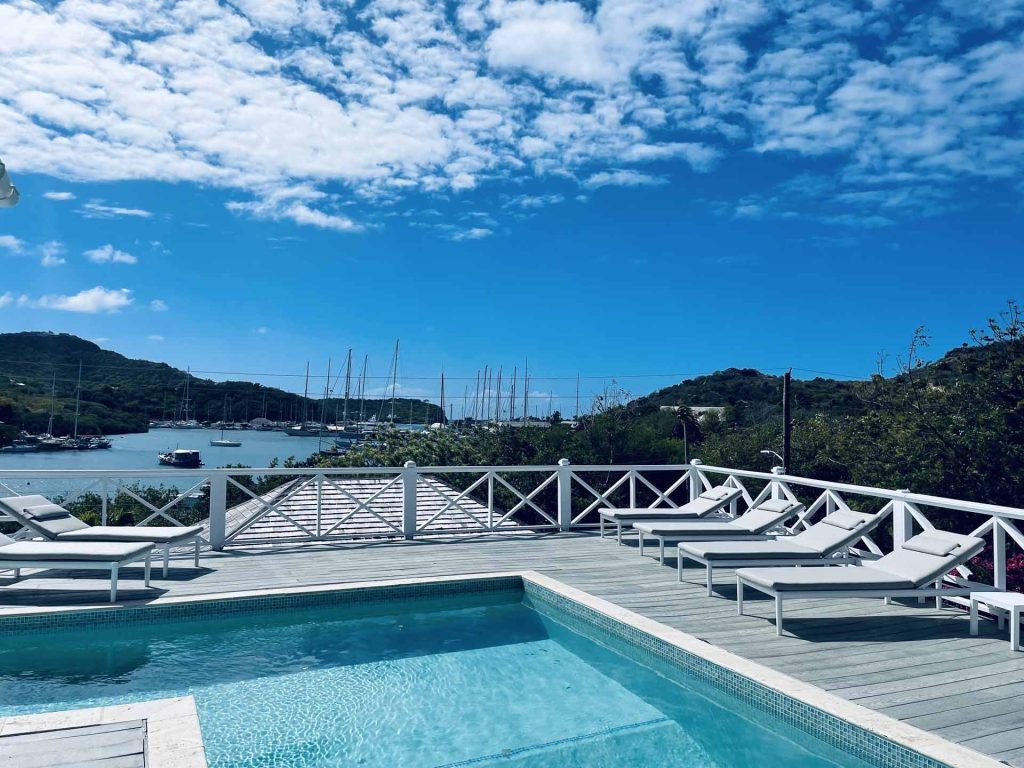
For visitors deciding where to stay in Antigua, the choice of area shapes the entire experience. English Harbour is the version of the island that most fully captures what makes Antigua distinctive, not just the beaches, but the history, the sailing culture, the dining and the community.
The dockyard is at the centre, it is cobbled, historic, active and genuinely beautiful. Around it, within a few minutes’ walk, are more than 20 restaurants and bars, two beaches, a national park with miles of hiking trails, sailing marinas, and a community of Antiguans, long-term expats and visiting yacht crews that gives the area a social richness rare for somewhere this small.
Staying at Kittyhawk puts you directly opposite the dockyard, with harbour views, a private pool and a jetty that gives you direct access to the water. The villa sleeps up to 10 across four bedrooms and is well suited to families and groups who want to experience English Harbour as residents rather than passing visitors.
What English Harbour is like, more than anywhere else on the island, is a place that rewards slowing down. The more time you spend there, the more it gives back.
Browse Kittyhawk and check availability →
Final Thoughts
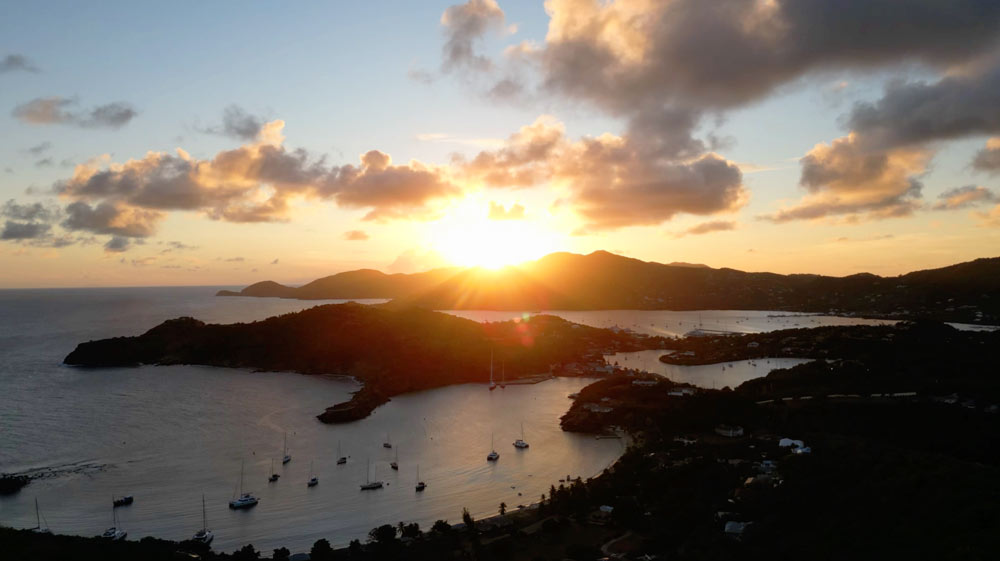
Antigua is unlike most of the Caribbean. It has the beaches, the weather and the rum, but it also has Nelson’s Dockyard, Antigua Sailing Week, a food culture shaped by centuries of layered immigration, and a community with its own genuine character. It’s an island with history you can walk through, a sailing culture that is alive rather than performed, and a pace of life that most visitors find they’ve been looking for without knowing it.
To plan when to go, what to pack and what to do when you get there, read our complete Antigua travel guides. And if English Harbour is where you want to be, Kittyhawk is the place to do it from.